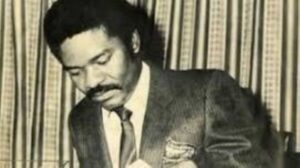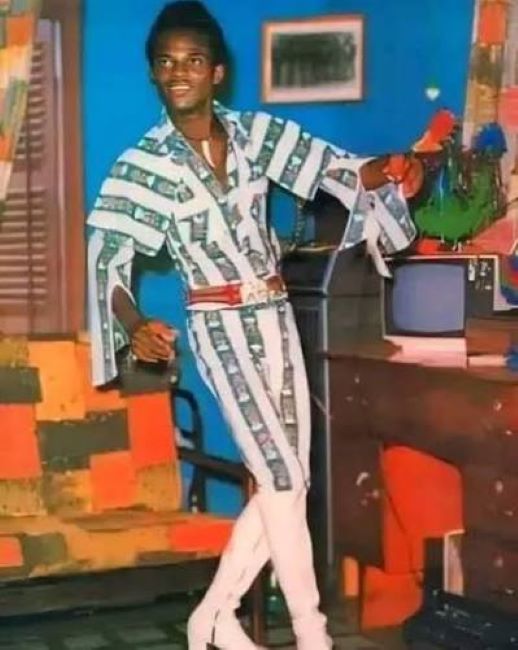
Prince Nico Mbarga | File Image
There are some stories that begin with fame. There are others that begin with struggle.
The story of Prince Nico Mbarga and Rocafil Jazz began with the civil war.
Long before the world heard “Sweet Mother,” Nico was just a young Nigerian-Cameroonian boy with a deep love for music.
He had grown up around music, learning the xylophone and listening to highlife on the radio.
His father, who was a xylophone player, helped to awaken that love in him. But life later took him far away from home.
When the Nigerian Civil War started in 1967, Nico escaped to Cameroon.
He was still young, and the world around him had suddenly become dangerous.
He left behind his mother and family and found himself in Mamfe, Cameroon.
There, he did not immediately become a musician.
He became a band boy; his job was simple but important. He carried instruments for a Congolese band as they travelled to hotels and places where they performed. He watched the musicians closely.
He listened to their guitars. He studied their fingers.
He listened to the rhythms and melodies.
He was carrying instruments, but he was also carrying knowledge.
Every performance became a lesson.
The Congolese musicians introduced him to a different guitar style, especially the beautiful finger-picking sound of Congolese rumba.
Nico became fascinated by it. He began teaching himself the guitar, while also developing his skills on the conga, bass and other instruments.
When the war ended, he wanted to return to Nigeria, but the first attempt to cross the border failed,
He was arrested because he did not have the required documents.
But Nico was determined to cross, so he tried again.
This time, he went through the bush paths.
In 1970, he finally crossed back into Nigeria through the bush and made his way to Onitsha.
He had returned to his family, but he was not returning as the same person who had left.
He had gone to Cameroon as a young man running from war.
He came back as a musician.
Onitsha was a busy commercial city, full of traders, hotels, nightclubs and musicians. It was here that Nico began to build his professional career.
He played with hotel bands, including the Melody Orchestra, and gradually became known among musicians and music lovers in the city.
But Nico wanted more.
He did not want to spend his whole life playing in somebody else’s band, he wanted his own band, he wanted his own sound.
He wanted to bring together the different musical worlds that had shaped him.
And so, Rocafil Jazz was born.
The band became a meeting point for different African cultures.
Nigerian highlife met the guitar sounds he had learned in Cameroon from Congolese musicians.
Musicians from different backgrounds became part of the journey, and the sound of the band became something special.
It was African music without borders.
Nico was Nigerian through his mother, he was Cameroonian through his father, and his music carried both worlds.
The band began performing regularly in Onitsha, including at the Plaza Hotel.
Night after night, Nico and his musicians played while people gathered to dance and listen.
The band recorded a first single that did not make the impact they hoped for.
Then came another song.
“I No Go Marry My Papa.”
This time, people listened.
The song became a regional hit and helped to put Nico and Rocafil Jazz on the map.
The record attracted the attention of EMI, one of the major record companies of the time.
Nico and Rocafil Jazz signed with the company.
It looked like the dream was finally coming true.
But music is full of surprises.
EMI wanted another successful record from the band.
Nico and Rocafiljazz struggled to break beyond their regional audience, and eventually their relationship with EMI came to an end.
Nico could have become discouraged, instead, he went back to writing.
And this time, he wrote something different.
He did not write about a beautiful woman, he did not write another love song, he wrote about his mother.
The idea came from his own life.
After his father’s death, Nico had seen the sacrifices his mother made for her children.
She was a widow and a struggling farmer, yet she continued to care for her family.
Nico remembered those sacrifices, he remembered the mother who would not allow her child to remain hungry.
The mother who would carry her crying child, the mother who would stay awake when her child was sick, and he turned those memories into a song “Sweet Mother.”
The song was simple.
The words were in Nigerian Pidgin.
The melody was warm.
The guitar carried the beautiful finger-picking style he had learned from Congolese music.
But behind the simple words was a very deep emotion.
Nico was saying thank you to his mother.
He was saying thank you to every African mother.
He was saying thank you to the women who suffered quietly so their children could live better lives.
Nico took the song to EMI.
And this is where the story becomes almost unbelievable.
The song that would eventually become one of Africa’s most famous songs was rejected.
Accounts of the story say EMI considered the song too childish. The demo was later also rejected by other record companies, including Decca and Philips.
Imagine Nico standing there with the song in his hands.
He believed in it.
But the people who controlled the record business did not.
The song was too simple.
Too ordinary.
Too childish.
At least, that was what they thought.
But Nico refused to let the song die.
He continued performing it.
Whenever Rocafil Jazz played, Nico would sing “Sweet Mother.”
And slowly, something began to happen.
People started responding.
The audience understood the song immediately.
They did not care whether music executive thought it was childish.
They knew exactly what Nico was talking about.
They knew their mothers.
Then one day, a man named Romanus Ementa Okonkwo, better known through his record company Rogers All Stars, heard Nico performing at the Plaza Hotel in Onitsha.
Okonkwo listened.
And unlike the others, he saw something.
He saw a star.
He heard something in the song that the major record companies had missed.
Okonkwo developed a relationship with Nico and invited him to perform at the hotel.
When he heard “Sweet Mother,” he understood that there was something special about the song.
This was the moment everything changed.
The big record companies had closed their doors.
But a smaller Onitsha record company opened one.
Rogers All Stars embraced “Sweet Mother”
Nico and Rocafil Jazz went into the recording process.
The band worked on the song until they were satisfied.
And when the record was finally released in December 1976, nobody could have predicted what would happen next.
At first, it was another record from Onitsha.
Then people started buying it.
People started playing it.
People started dancing to it.
People started singing it.
The song moved from Onitsha to other parts of Nigeria.
Then it crossed the borders.
Cameroon heard it.
Ghana heard it.
Other parts of Africa heard it.
And soon, “Sweet Mother” was no longer just a Nigerian record.
It became an African song.
A mother could hear it and think about her child.
A child could hear it and think about his mother.
A person living far away from home could hear it and remember the woman who raised him.
That was the secret of the song.
It was simple enough for everyone to understand.
But it was deep enough for everyone to feel.
“Sweet Mother” became an enormous commercial success, selling more than 13 million copies worldwide, there is no doubt that it became one of the biggest African recordings of its era.
In 2004, BBC listeners and readers voted it Africa’s favourite song of all times.
The song that had once been called childish had become an African anthem.
And behind that song was Rocafil Jazz.
It is important to remember that there were musicians behind Prince Nico who made sweet mother song what it is; the drummer, the bassist, the lead guitarist, rhythm guitarist, kongarist, backup and all members of Rocafiljazz who helped turn his ideas into music.
They rehearsed together.
They travelled together.
They performed together.
They stood beside Nico when the audience was small.
They stood beside him when the crowds became enormous.
The success of “Sweet Mother” opened the door to tours across the world.
The young man who once carried instruments for another band was now leading one of Africa’s most famous musical groups.
The boy who had crossed the border through the bush was now crossing national borders with his music.
The musician who once struggled to get a record company to believe in him was now being welcomed by audiences across the World.
Prince Nico Mbarga continued making music for many years.
He became known for his unique style, his guitar playing, his powerful voice and his unforgettable stage appearance.
He even became famous for wearing platform shoes during his performances.
Prince Nico Mbarga died in 1997, but his voice never really left us.
He could not have known then that the music he was learning would one day help him create a sound that would travel around the world.
He could not have known that the guitar style he discovered while serving as a band boy would become part of his signature.
He could not have known that the song one record company called childish would one day be sung by millions.
And he certainly could not have known that a simple song about a mother would become one of the most loved African songs ever recorded.
But perhaps that is the beauty of his story.
Prince Nico Mbarga did not begin with fame.
He began with pain.
He began with war.
He began as a young boy trying to survive.
He carried instruments before he carried crowds.
He learned before he taught.
He was rejected before he was celebrated.
He walked through the bush before he walked onto international stages.
And when the world finally heard him, it heard not only a singer.
It heard a life.
It heard Nigeria.
It heard Cameroon.
It heard the sound from Onitsha.
It heard the spirit of Rocafiljazz.
And most importantly, it heard a son saying thank you to his mother.
That is why the story of Prince Nico Mbarga and Rocafil Jazz will never be only the story of a hit record.
It is the story of a young African musician who refused to give up.
It is the story of musicians from different backgrounds who came together and created something greater than themselves.
It is the story of a song that was rejected by powerful people but accepted by ordinary people.
And it is the story of how one simple message travelled from a small stage in Onitsha to millions of homes across Africa and beyond.
The record company said it was childish.
Africa answered:
“No. This is our story.”
And Africa has never stopped listening to Prince Nico Mbaraga’s music.
The world has not stopped listening to Rocafiljazz Panco music.
Today Rocafil Jazz is back again with Nico Mbarga Jnr, Phils Mbarga & Estelle Mbarga.
.Copied.
….………..
For more interesting stories, click: nigerianewsflight.com.ng
valoa2000@yahoo.com